The short version
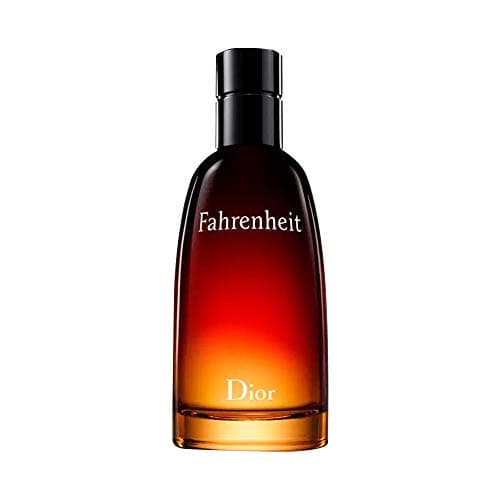
Buy it if you want to smell like nobody else in the room and you are genuinely prepared for the possibility that you will hate it. Do not buy it blind, do not buy it as your first good fragrance, and do not buy it because it is famous. Fahrenheit is the rare case where "iconic" and "crowd-pleasing" point in opposite directions. Almost nothing has smelled like it since 1988, which is both the entire argument for owning it and the reason a meaningful number of people find it unwearable.
That is the most useful thing to know before you spend designer money on it. This is not a safe, complimentable, buy-it-and-forget-it purchase like the bottles we rank on best cologne men women love. It is a deliberate, slightly confrontational fragrance that asks something of the wearer, and the people who love it tend to love it more than they love anything else they own.
What is actually in it
The pyramid published for Fahrenheit is bergamot and mandarin up top; carnation, nutmeg and violet leaves in the heart; and patchouli, vetiver and leather in the base. Osmoz files it as woody-floral musk and dates the creation to 1988. Read the heart again, because it is the whole fragrance: violet leaf, which is green, stemmy and faintly metallic rather than floral, sitting directly on top of a leather base.
Two provenance notes, because we would rather tell you than imply more than we have. Dior's own site refused every Fahrenheit URL we tried this week — the US product page, the UK page and the brand's own "discover Fahrenheit" page all returned HTTP 403 — so the pyramid above is cited to Osmoz rather than to Dior. Dior's official page is still cited on our best Dior cologne ranking from a run when it was reachable, and the two agree on structure.
Second: we are not going to tell you who composed it. The sources that publish a perfumer credit for Fahrenheit contradict each other — some name Jean-Louis Sieuzac alone, some add Michel Almairac, some add Maurice Roger, and at least one names a different perfumer entirely. We have no first-party attribution to settle it, and the honest version of that is to say so rather than to pick the most-repeated answer and present it as fact. Our editorial policy covers why we handle contested credits this way.
Why half the people who smell it say "gasoline"
This is the single most-searched thing about the fragrance and it has a real answer, so it is worth doing properly.
Leather in perfumery is not an extract. There is no oil pressed from a hide — leather is an accord, assembled from other materials, and the oldest of those materials is birch tar, made by dry-distilling birch bark. The connection is not metaphorical: Russia leather was tanned and then oiled with birch bark oil, which waterproofed the hide and repelled insects and gave it an aroma that was read as a mark of quality. Birch tar oil went on to scent the eighteenth-century Spanish leather Peau d'Espagne and, by the turn of the twentieth century, had become a specialty perfume material used specifically in leather and tobacco compositions and the Cuir de Russie style. In a pyramid it sits in the base and, as Wikipedia puts it, imparts a leathery, smoky note.
A tar-derived base note is already an unusual thing to build a department-store fragrance on. Fahrenheit then puts violet leaf over it. Violet leaf is green and metallic — people reach for words like crushed stems, wet earth, petrol, struck match — and the combination of a metallic green note with a smoky base produces exactly the hydrocarbon impression people report. Nobody is wrong about it. The people who say gasoline and the people who say wet earth are smelling the same accord and reaching for different reference points.
If that sounds like a defect, consider the alternative reading: it is the reason this fragrance has survived thirty-eight years in print while hundreds of safer launches disappeared. Our notes guide and fragrance families explained cover the raw materials, and best leather cologne for men places it against the rest of the family — including the one cheap bottle that chases the same violet-over-leather idea.
How it wears
The opening is the brightest part of the fragrance and the shortest: bergamot and mandarin give you a few minutes of something almost conventional before the violet leaf arrives and the character changes completely. From there it is a long, slow descent — carnation and nutmeg give it a dry spiciness, and the patchouli, vetiver and leather underneath pull it progressively darker, drier and closer to the skin. The dry-down is the best part and it is the part most people never get to, because they decide at minute ten.
On performance, what we can say is structural rather than numerical. This is an eau de toilette, which normally means a short wear, and Fahrenheit is a notable exception: the base is built on three of the most tenacious materials in perfumery, and it behaves accordingly — strong early projection and a dense, close presence long after. We are not going to give you an hour count, because we have no instrument to produce one and the honest version of that claim is a range that depends on skin, weather and dose. Our methodology page states that rule for every score on this site, and longest-lasting cologne places it against the field.
Spray discipline matters here more than with almost anything else we review. One spray of Fahrenheit is a statement; three is an argument you are having with everyone around you. Our how many sprays guide has the arithmetic.
Where it belongs, and where it does not
Cold air, and ideally dry cold air. Fall and winter, evenings, a coat rather than a shirt. It is excellent for fall specifically, because the dry spice-and-leather register matches the season the way very few fragrances match any season. It is a good night out choice for someone who does not want to smell like the other nine men at the bar, and a defensible date night choice only if you already know the other person likes it.
It is a poor summer fragrance and an actively bad office one. In heat the leather and the metallic green note turn sharp. In shared air a fragrance this distinctive and this persistent is a decision you are making on other people's behalf, and unlike a sweet gourmand — which people merely find strong — this one invites actual comment. Our best office cologne ranking exists for the desk, and best summer cologne for men for July.
The reformulation question, answered honestly
You will find a great deal written about vintage Fahrenheit being stronger, dirtier and more animalic than the current bottle, and the general direction of that claim is plausible — IFRA restrictions and cost pressure have thinned a great many eighties compositions, and nothing about Fahrenheit makes it immune.
What we will not do is tell you which year you want, because the sources that date specific formulations disagree with each other and at least one of them openly admits its own dating is rumor. We have no first-party statement from Dior on reformulation dates. If you buy the current bottle you are buying the current bottle; if you chase a vintage one on a secondary market you are taking on a counterfeit and storage risk that we would not take on ourselves for this fragrance. Our how to spot fake cologne guide covers the checks, and how to store cologne explains why a thirty-year-old bottle is a gamble even when it is genuine.
The honest case against buying it
Three real objections. None of them is a reach.
It is expensive for an EDT, and it is not versatile. Fahrenheit sits in the upper-middle designer bracket — several times what the best Gulf-house bottles cost — and what you get for the money is originality rather than coverage. It has roughly two settings. If this is going to be your only good bottle, it is the wrong choice, and our best cologne under $100 page has more useful answers for that job.
It is of its decade, audibly. The dry, spicy, leather-forward register is a late-eighties register. That reads as timeless to people who like it and as dated to people who do not, and both reactions are about the same quality in the bottle. If your reference points are modern ambroxan freshies, this will sound like a different language — compare it against Dior Sauvage, which is the same house doing the exact opposite thing.
The blind-buy failure rate is high. This is the objection we take most seriously, because it costs real money. We would put Fahrenheit in the top three most-likely-to-be-returned fragrances on this entire site. A sampler or a decant settles it for a fraction of the price — see best cologne sampler sets.
Who should skip it
Two groups, clearly. First, anyone buying their first good fragrance. Fahrenheit is a third or fourth bottle. It is a bad introduction to the category and a worse introduction to leather — our best cologne for beginners ranking and how to choose your first cologne both point elsewhere for good reasons.
Second, anyone whose main criterion is compliments. That is a completely legitimate reason to buy fragrance and this is not the bottle for it. Sweet, warm, familiar fragrances get compliments; strange ones get questions. If compliments are the objective, the honest recommendation is 9 PM or Khamrah at a fraction of the price, or the designer picks on best cologne for men.
If what appeals to you is the leather rather than the violet, there is a cheaper route into this family: the dry Gulf oud-leathers and the one budget bottle that genuinely attempts the violet-leather accord are all ranked on best leather cologne for men, and best woody cologne for men covers the family next door.
Buying it without getting burned
Dior is among the most counterfeited houses on the market, and a thirty-eight-year-old fragrance with many packaging generations is a particularly easy thing to fake convincingly. Buy from a seller you can identify, treat a deep discount as a warning rather than a win, and check the batch code. Our how to spot fake cologne guide covers the checks and where to buy cologne online covers the sellers. The card above carries a live price read from the Amazon product feed with the date it was read; we deliberately do not print a number in this text, because a figure typed into an article is wrong within a month.
The verdict
Fahrenheit is one of the few genuinely great fragrances still sold in a department store, and one of the few we would actively talk some people out of buying. As a second or third bottle, for cold weather, for someone who has smelled it and knows, it is close to unbeatable — there is no substitute, which is a sentence we can write about almost nothing else. As a blind buy, as a first fragrance, or as a single do-everything purchase, it is the wrong bottle, and being wrong about this one is expensive.