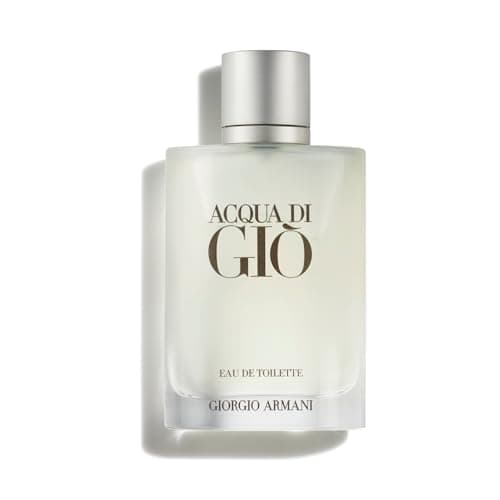
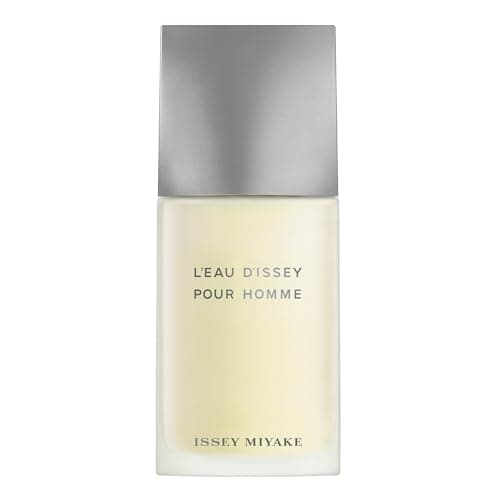
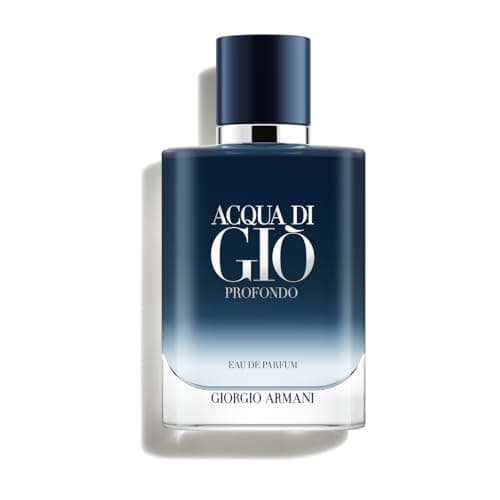
Buy Profondo. For almost everyone asking this question it is the better bottle — the same marine idea built deeper and darker, in an eau de parfum that lasts a full working day while still sitting close to the body. Buy the 1996 original instead if what you actually want is a bright, weightless summer fragrance and you accept that it will fade within a few hours, or if you specifically like how the original smells and have no complaint to fix. They are not two strengths of one fragrance; the shared name hides a genuine difference in character, and that is what this page is about.
The one-line difference
Acqua di Gio (1996)is the fragrance that defined the marine category for a generation. Fragrantica dates it to 1996 and credits Alberto Morillas, Christian Dussoulier and Annick Menardo; Armani's own story for it is the beauty of Pantelleria. It reads bright, citrusy and aquatic — sea air and sunlight, essentially weightless. Its honest weakness is the one owners name most: it is light and it fades, often inside a few hours.
Acqua di Gio Profondo (2020)is the same idea taken underwater. Fragrantica classes it as an aromatic fougère launched in 2020 and credits Alberto Morillas — the original's perfumer — which is unusual and matters: this is a rebuild by the person who made the first one, not a flanker handed to a different nose. In practice it reads as deep water rather than bright surf: marine and bergamot over rosemary, lavender and cypress, on a mineral, musky base. It is an EDP, and it performs like one.
So which one?
If you want one marine fragrance for general wear, including work: Profondo. Its performance has an unusual and very useful shape — it lasts a full day while staying fairly close to the body, so it reads expensive at a meter and disappears at three. That is exactly what a professional fragrance should do, and it is why it is our top pick on the 30s ranking and a fixture on the office ranking.
If you want a hot-weather bottle and nothing else:the original. In genuine heat its weightlessness is the feature, and Profondo's depth can read as too much. It is also the cheaper of the two and it discounts more often. Our summer ranking is where it belongs.
If you already own the original and want more of it: Profondo is the upgrade, with one caveat worth stating clearly. You are not buying a louder Acqua di Gio — you are buying a darker relative that keeps the marine signature and changes almost everything around it. If you love the original's brightness specifically, Profondo takes exactly that away. Our guide to what a flanker is covers how to read this kind of relationship before you buy, and Profondo is one of the four flankers it names as a genuine improvement on its original.
If neither convinces you:the third pick on this page is the honest alternative. Issey Miyake L'Eau d'Issey Pour Homme works the same aquatic-woody territory from a different angle — cleaner, more mineral, less sweet — and it has been doing it since the nineties without ever being as widely worn as the Armani. It is the pick for someone who likes the category and would rather not smell like the two most-worn bottles in it. The wider field is on our aquatic ranking.
What this page is not
It is not our Acqua di Gio versus Sauvage comparison, which answers a different question. That page is a cross-house taste decision — sea air against clean ambroxan radiance — and its conclusion is that the two are genuinely different fragrances rather than competitors. This page is inside one house: original against rebuild, EDT against EDP, and whether to upgrade. If the bottle you are actually weighing Profondo against is a Dior, read Acqua di Gio vs Dior Sauvage instead.
It is also not a ranking of the whole Acqua di Gio shelf, and that is worth saying because the shelf is crowded. Armani has put the Acqua di Gio name on a Profumo, an Absolu, a Parfum and an Elixir among others, and autocomplete for this comparison is full of people trying to work out which is which. Two of them are in our catalog with a verified listing and a published composition, and those two are what this page compares. We do not describe fragrances we cannot source, so the rest are named here and left unranked rather than guessed at.
Concentration is the real difference
More than the notes, and it is the thing most people buying this comparison are actually trying to solve. The original is an eau de toilette with a famously light touch; Profondo is an eau de parfum. In practice that means the original is a fragrance you re-apply at lunch and Profondo is one you do not. If your complaint about Acqua di Gio is "it disappears," the fix is the concentration, not a different marine fragrance — and that is the single most useful sentence on this page. Our concentrations guide explains what the labels mean in oil load and hours, and how to make cologne last longer covers what to do if you own the EDT already and are not ready to replace it.
Where each one belongs in a wardrobe
They are not redundant, which is the case for owning both if you are inclined to. The original is a hot-weather bottle: June to September, daytime, the kind of weather in which a heavier fragrance becomes unpleasant. Profondo is a year-round bottle that leans slightly cool — it works in an office in February and at dinner in October, and it holds up in summer better than most EDPs because the marine accord keeps it from reading rich.
If you are buying one and only one, buy Profondo. If you are building a wardrobe properly, this pair sits in the "versatile default" and "hot weather" slots respectively, and our fragrance wardrobe guide sets out the order to fill the gaps in. Neither is an evening-and-cold bottle; for that third slot the winter ranking is the page to shop.
The ubiquity problem, honestly
Acqua di Gio is one of the most-worn men's fragrances of the last thirty years. That is not a quality criticism — it got there by being very good at what it does — but it is a fact about how it will be read, and in the right crowd it is instantly recognizable. Profondo is far less common and reads as a considered choice rather than a default, which for a lot of buyers is a meaningful part of the upgrade.
If smelling like nobody else is the actual priority, neither Armani is the answer and we would rather say so. The third pick here is a step in that direction; our signature scent guide takes the question seriously, and the Arabian ranking and oud for beginners ranking are where the genuinely uncommon bottles at sane prices live — at the cost of leaving the marine lane entirely.
Prices, and what to check on the listing
There are no numbers in this text on purpose — the live figure beside each pick is pulled from Amazon and carries the date it was pulled. The bands are stable: the original sits at the lower end of the designer counter and goes on promotion regularly, Profondo sits above it and discounts less. Watch the bottle size on every listing, because Armani sells both in several formats and the lowest sticker is frequently not the lowest cost per ounce; our size guide works through that, and how much to spend on cologne covers what the step up between these two price bands actually buys.
One more practical note: because the Acqua di Gio name is on so many bottles, read the full product title before you buy. A listing that is surprisingly cheap for "Profondo" is usually the EDT in a similar box rather than a deal — the same trap our Sauvage concentration comparison describes for Dior, and how to spot fake cologne covers the other explanation for a price that looks too good.