Musk smells warm, soft, slightly sweet and powdery, with a quality most people end up describing as clean skin. It has almost no sharp edges and almost no single recognizable character, which is exactly why it is so hard to name: musk is the note that makes the rest of a fragrance smell like it is coming off a person instead of out of a bottle. Wikipedia's own entry gives up on a literal description and calls the aroma "animalistic, earthy and woody" or "something akin to the odor of baby's skin" , which is about as close as words get.
The practical version, the one that matters when you are standing over a listing deciding whether to buy: if a fragrance description says musk, you are being told something about its texture and how long it stays, not about a smell you will be able to pick out. Almost nobody smells musk and thinks "ah, musk." They think the fragrance smells soft, expensive, skin-like, or warm — and musk is doing that.
What musk originally was, and why you have never smelled it
Real musk is an animal product. It came from the male musk deer of the genus Moschus — the Siberian musk deer, Moschus moschiferus, is the species usually named — and specifically from a preputial gland in a pouch under the skin of the animal's abdomen. The deer live across a wide band of Asia: Tibet, India, Nepal, Pakistan, Afghanistan, China, Siberia, Mongolia, Korea and northern Vietnam. The dried glandular secretion, the "musk pod," was one of the most valuable materials in the history of perfumery.
The compound responsible is muscone, described as the organic compound primarily responsible for the characteristic odor of musk. And here is the part that reframes the whole question: natural musk was used extensively in perfumery until the late 19th century, when, in Wikipedia's words, "economic and ethical motives led to the adoption of synthetic musk, which is now used almost exclusively." Trade in the real material is controlled under CITES, and illegal poaching continues.
So unless you have handled a museum-grade antique perfume, you have never smelled deer musk, and neither have we. Every musk in every bottle linked on this page — and essentially every bottle in any shop — is a synthetic. That is not a scandal and it is not a downgrade. It is the reason a long-lasting musky fragrance can cost twenty dollars.
The three families of synthetic musk
This is worth knowing because the three groups smell meaningfully different, and knowing they exist explains why two fragrances can both say "musk" and smell nothing alike.
Nitro musks came first. Albert Baur made the first artificial musk in 1888, by condensing toluene with isobutyl bromide over aluminium chloride and nitrating the product — an accident of synthetic chemistry that happened to smell like one of the most expensive materials on earth. Musk xylene and musk ambrette are the famous ones. They fell out of favor for practical reasons first: photochemical reactivity and instability in alkaline media, which is a polite way of saying they broke down in soap.
Polycyclic musks replaced them, because they held up in detergent. Galaxolide and Tonalide(also sold as Fixolide and Tetralide) are the workhorses, chosen for performance and stability in harsh detergents. Galaxolide in particular is commonly used in laundry detergent — which is the single most useful fact in this entire article, and we will come back to it, because it is why "clean laundry" and "white musk" smell like the same thing to most people.
Macrocyclic musks are the modern tier: large-ring ketones and lactones such as cyclopentadecanolide (Exaltolide), ethylene brassylate (Musk T) and Habanolide. Leopold Ruzicka synthesized muscone itself back in 1926, but macrocyclics were not commercially produced until the late 1990s because they were difficult to synthesize. They are expected to displace the older classes as the safer option — the nitro and polycyclic musks are lipophilic, show low biodegradability and accumulate in fat tissue and in the environment, which is why the industry has been moving.
Synthetic musks as a group are summed up in one phrase worth remembering: a "clean, smooth and sweet scent." Clean, smooth, sweet. Not animal, not dirty, not sexual. That is the modern musk you will actually buy.
The four things people mean by "musk"
White muskis the big one and the one most shoppers are asking about. Soft, powdery, faintly sweet, laundry-adjacent, slightly soapy. This is the polycyclic-and-macrocyclic register — the smell of a clean t-shirt and warm skin. If a product is marketed as "white musk" or "clean musk," expect comfort, not character.
Animalic muskis the old register: warmer, heavier, faintly funky, with the earthy quality the dictionary definitions keep reaching for. In modern perfumery it is usually built with a blend of materials rather than one molecule, and it is the register people mean when they call a fragrance "skanky." It is rare at the price tier this site covers, and essentially absent from the designer mainstream.
Musk as a fixativeis the invisible job and the most common one by volume. A fixative is, formally, a substance used to equalize the vapor pressures — and so the volatilities — of the raw materials in a perfume, and to increase the perfume's odor tenacity. In plain terms it increases the time the scent lasts by slowing the rate at which the lighter molecules evaporate. Muscone, along with civetone, is named among those fixative materials, now mostly chemically synthesized because the artificial routes are more economical, more consistent and more ethical. So when musk appears at the bottom of a note list, part of what it is doing is holding the rest of the fragrance down. Our longest-lasting cologne ranking is, underneath, largely a ranking of how well bottles use base materials like this one.
"Musk" as a marketing wordis the fourth, and the one to be skeptical about. On a budget listing, "musk" in the copy can mean anything from a carefully built skin accord to a single cheap polycyclic poured in for longevity. The honest test is whether the house publishes a note pyramid at all. Every pick below does, and we quote it.
Why musk smells like clean laundry to you specifically
Because, in a meaningful sense, it isyour laundry. Galaxolide — one of the two dominant polycyclic musks in fine fragrance — is commonly used in laundry detergents. You have been smelling it on your towels, your sheets and your shirts your entire life, in quantities far exceeding anything you would spray on. By the time you meet it in a fragrance, your nose has a thirty-year association already loaded, and it is not "perfume." It is "clean."
This is worth knowing before you spend money, because it cuts both ways. It is why white-musk fragrances read as effortless, inoffensive and grown-up — the single safest thing to wear into a room full of strangers. It is also why some people find them boring: there is no surprise available in a smell you have been marinating in since childhood. If a fragrance has ever struck you as "nice but it just smells like soap," a musk was probably why.
What to look for before you buy a musk
Four things, in this order. One: which direction the musk leans. Clean-and-powdery and warm-and-sweet are different purchases; the supporting notes tell you which one you are getting long before the word "musk" does. Ambergris, oakmoss or citrus beside it pushes clean. Vanilla, sugar or amber beside it pushes cozy. Two: where musk sits in the pyramid. Musk is a base note almost without exception, and base notes are usually not perceived until around thirty minutes after application — so a musk is a thing you smell on the back half of the wear, not in the shop. Three: the concentration.Musk's whole value is that it lasts, so it is wasted in a weak formula; an eau de parfum will show you what the base is actually doing and an eau de toilette often will not. Our concentrations guide has the percentage ranges. Four: whether you can smell it at all.Some people genuinely cannot smell certain musk molecules — if a fragrance everyone else calls "soft and musky" smells like nothing much to you after an hour, that is a known thing and not a defective bottle.
The four picks below are ordered from the cleanest musk to the warmest, not by our overall scores — the same deliberate departure from the rubric the oud guidemakes, because for a "what does it smell like" question the gradient is the useful information. Each one was picked on a single hard test: musk appears in the bottle's published base, from a source we can cite, which is listed in Sources at the foot of the page.
What the published pyramids actually say
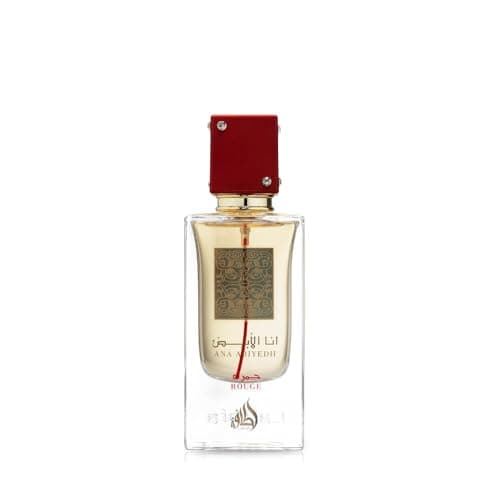
Lattafa's own product page for Ana Abiyedh Rouge gives nashi pear, kumquat and bergamot up top, caramel and geranium in the heart, and ambergris, musk and oakmoss in the base, filed as a woody-spicy for women and men. That base is the clean register in textbook form: ambergris and oakmoss on either side of the musk, with nothing sweet underneath to drag it warm — which is why this bottle is the one on this page that reads as soap and laundry rather than skin and sugar.
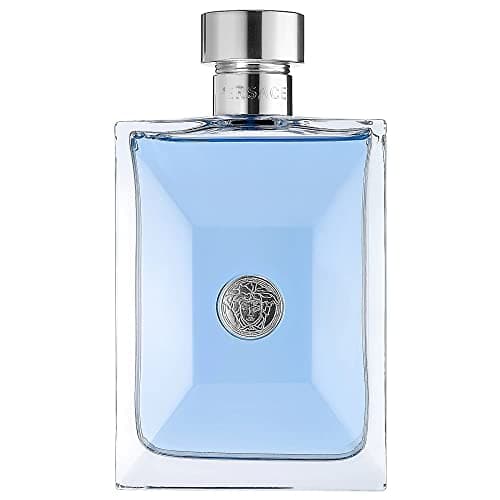
Versace Pour Homme is an Alberto Morillas aromatic fougère from 2008 — lemon, bergamot and neroli over clary sage, geranium and cedar, landing on musk and tonka. It is the designer version of the same idea, and the tonka is the tell: a whisper of sweetness under the musk is the difference between "clean" and "clean and slightly creamy."
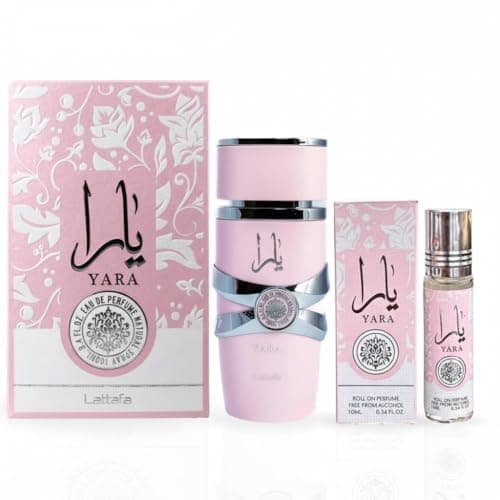
Lattafa Yara is where the register turns. The house publishes it as a 2020 amber-vanilla for women — tangerine, heliotrope and orchid over a gourmand-and-tropical heart, on vanilla, sandalwood and musk. Same molecule family, completely different job: here the musk is a bed for a dessert rather than the point. Worth flagging, because it is the kind of thing this site states rather than smooths over: Lattafa's Yara page carries two note blocks that do not match word for word — a "Fragrance Notes" list and a "Product Information" paragraph. On Yara the two agree on substance (tropical notes versus tropical fruits, and the base in a different order), so we have used them as one. That is not true of every Lattafa page; the Oud for Glory review documents a pair of lists on the same page that genuinely contradict each other.
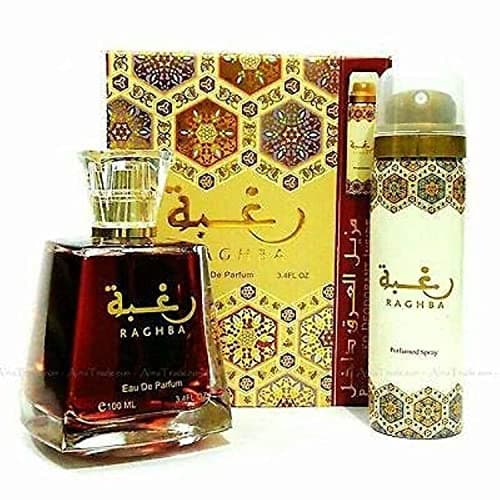
Lattafa Raghba is the warmest end: sugar, then incense, then vanilla, oud, musk and sandalwood, as a unisex amber-vanilla eau de parfum. Four base materials, three of which are heavy, and the musk is the one making the other three sit still for the length of a working day. Our full Raghba review takes that bottle apart on its own.
Is musk a men's or a women's note?
Neither, and this is the one note where the marketing split is most obviously arbitrary. The four bottles above are published by their houses as, in order: for women and men, for men, for women, and unisex — and all four are using the same base material to do the same job. White musk gets marketed to women and "clean" fougères get marketed to men, but the molecule does not know. Our guide to whether cologne is for men or women goes through what the label actually tells you.
Where musk fits in a collection
First, usually — which is the opposite of oud. A clean musk is the most versatile thing you can own: it works in an office, in summer, on a first date and at a funeral, and it is almost impossible to offend anyone with it. That is precisely its weakness as a signature. If you want to be remembered, a musk is not the bottle that does it; if you want to be comfortable, nothing beats one. Our fragrance wardrobe guide sets out the order that wastes the least money, and fragrance notes explained covers how notes and families work in general. For the two neighboring base notes, read what amber smells like and what ambroxan smells like — ambroxan in particular is the other modern material doing the skin-like job, and the two are constantly confused.