Cologne is for anyone who likes how it smells.The word describes a concentration of fragrance oil, not a gender, and the fragrance that gave it its name was sold to men and women alike for two centuries before American marketing decided "cologne" meant men and "perfume" meant women. Nothing about the liquid in the bottle knows who is wearing it. This guide explains what the labels actually tell you, how to shop across them, and which bottles in our catalog their own makers sell to both.
Where the word came from
Eau de Cologne — "water from Cologne" — was first mixed in the German city of Cologne by Johann Maria Farina in 1709: a light blend of citrus oils, herbs and alcohol that became popular across Europe as a fresh alternative to the heavier French perfumes of the day. It was worn by everyone. Over time the term became generic for any light, citrus-forward fragrance at a low concentration, and then — specifically in American usage — for fragrance marketed to men, regardless of what was in it. That second meaning is the one most people in the United States now carry around, and it is entirely a marketing artefact. Our cologne vs perfume guide untangles the concentration meaning in detail.
What "for men" and "for women" actually mean
They mean the house has decided which shelf to put the bottle on. That is all. There is no ingredient that is male or female; there are conventions about which notes have been sold to whom. In the West, roughly: fresh citrus, lavender, aromatic herbs, woods, leather and tobacco have been sold to men; florals, sweet fruits, gourmand notes and powdery musks have been sold to women. Those conventions are real in the sense that they shape what you will smell in each aisle, and they are arbitrary in every other sense. Rose and oud are worn by men across much of the Middle East; lavender, the backbone of the men's fougère family, was a women's note when Fougère Royale launched in 1882. Sweet vanilla gourmands, sold to women for decades, are now the fastest- growing men's category.
What the label doesreliably tell you is the register the composition was built in, and that is worth knowing. A bottle sold "for women" will usually lean sweeter, more floral and more powdery than one sold "for men" from the same house. Not because women's skin needs it — because that is what the brief said. Read the label as a rough description of the smell, not as permission.
What "unisex" means
A house that labels a bottle unisex, or "for women and men," is saying it built the composition without a gendered brief and expects to sell it to both. In practice unisex fragrances cluster in a few registers: clean citrus and musk, dry woods and incense, spiced ambers, and — increasingly — sweet gourmands, which have crossed the aisle so thoroughly that many houses no longer bother to gender them. Whole houses, especially in the Middle East, sell most of their line without a gender at all.
Unisex is not a quality signal in either direction. It is not a compromise, and it is not more sophisticated. It is a bottle the house thought would sell on both shelves, and the only question that matters is whether you like it.
How to shop across the aisle
If you are a man curious about a women's fragrance, or a woman who prefers the men's shelf, the process is the same as any other purchase, with two adjustments. Sample first, always — the compositions on the other shelf are built in registers you may not have worn, and sweetness in particular changes on skin more than any other facet. A sampler set or a decant costs a fraction of a mistake. Ignore the bottle and the name. Fragrance marketing is the most gendered packaging in retail, and a great deal of what stops men buying a rose or women buying a leather is the shape of the glass. Decant it into a plain atomiser if that helps; the smell does not change.
On the question people actually mean when they ask — will it smell wrong on me? — the honest answer is that a fragrance smells like itself plus your skin, and your skin's chemistry is not gendered in any way a nose can detect. A sweet gourmand reads sweet on anyone. What changes is context: the same scent reads differently on a man in a suit than on a woman in a summer dress, because the people around you bring expectations. That is a social fact, not a chemical one, and it is entirely yours to decide how much to weight.
What to look for
If you want a bottle that will sit comfortably on either wearer, the registers that do it most easily are: clean citrus over musk (fresh, soapy, office-safe on anyone), spiced vanilla and amber (warm, cold-weather, reads expensive on anyone), and dry woods. Avoid the two extremes that read most strongly gendered in the West — big white florals and heavy leather-tobacco — unless that is the point. The three picks below are the bottles in our catalog whose own makers sell them to both, one from each of the first two registers and one sweet amber that started a thousand "affordable niche" recommendations.
Why the three picks
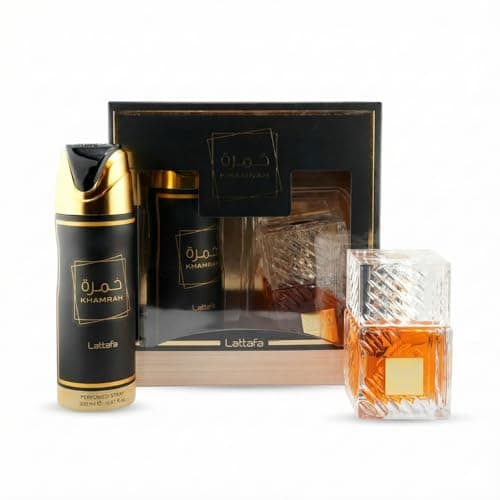
Lattafa Khamrahis sold by Lattafa as a unisex fragrance — its own product page lists the type as "Unisex" and describes it as a fragrance for women and men — and it is the clearest example of the sweet-amber register that has crossed the aisle completely. Cinnamon, nutmeg and bergamot over dates and praline, on vanilla, tonka and amber woods: heavy, warm, all-day, and it smells like it costs several times what it does. It appears on our men's gourmand ranking and would sit just as comfortably on the women's shelf. The Khamrah review has the detail.
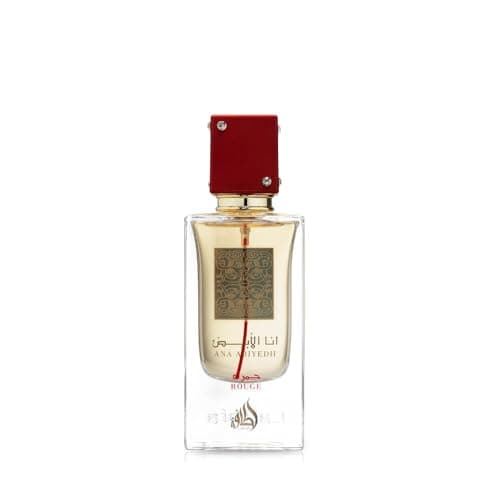
Lattafa Ana Abiyedh Rougeis the clean end of the spectrum, and the Amazon listing we link to above is titled "for Unisex." A soapy citrus-floral that reads mature and understated — put-together without asking for the room's attention — it is the register that works on anyone in any office, and at its price it is the cheapest honest way to test whether a shared fragrance suits you. Our Ana Abiyedh Rouge review covers it fully.
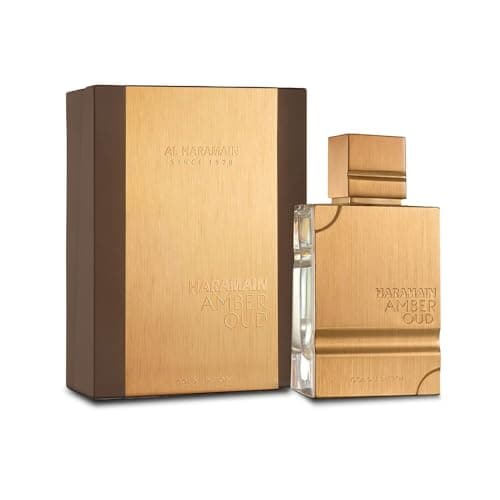
Al Haramain Amber Oud Gold Editionis the sweet, fruity amber that kicked off a thousand "affordable niche" recommendations, and the Amazon listing we link to above sells it as a "perfume for Women & Men." Syrupy, long-lasting, and for a lot of people the first taste of the niche-style lane without the niche invoice. It is the pick if the Khamrah register appeals but you want less spice and more fruit. The Amber Oud review is honest about who should skip it.
The honest caveat on these three
All three are from Arabian value houses, and that is not a coincidence: those houses gender their lines far less than Western designers do, which is why they dominate the unisex conversation at this price. The trade-offs are the usual ones for the tier — sweeter and louder than designer equivalents, occasionally rougher openings — and our Arabian ranking spells them out. We have not listed any designer bottle here as unisex, because none in our catalog is sold that way by its maker, and asserting it ourselves would be exactly the kind of claim this site does not make.
Where to go from here
If you came here from the women's side, the best perfume for women ranking is our full field, and several of its picks — the sweet gourmands especially — are worn across the aisle constantly. If you came from the men's side and want to understand the vocabulary before you shop, the notes guide is the primer. And if the thing you actually wanted to know was the difference between cologne, eau de toilette and eau de parfum, the concentrations guide is the page.