Thirty years and still going
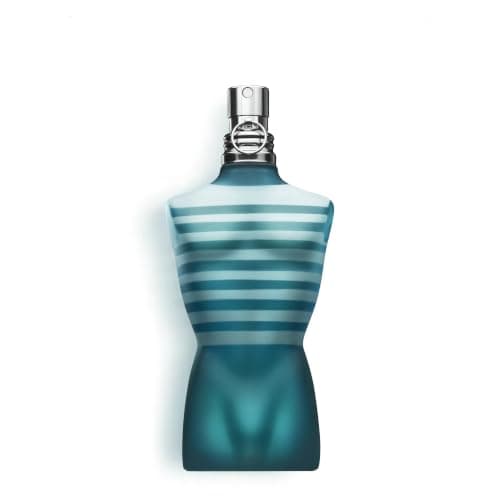
Le Male launched in 1995 in a bottle shaped like a sailor's torso, and it has been in continuous production and continuous conversation ever since. That is an extraordinarily rare achievement in a category where most releases are forgotten inside five years. It earned it by doing something nobody had done properly before: making a barbershop fougère sweet. If that word is new, our fougère guide explains the lavender-coumarin-moss family Le Male grew out of.
Scent impressions here are first-hand — this is one of the most recognizable fragrances ever made and hard to avoid — while longevity and projection figures are compiled from aggregated owner and community reports rather than measured in a lab.
How it opens, how it wears
The opening is a cool, sharp hit of mint and lavender with a bergamot lift — genuinely bracing, and for about ten minutes it reads like a classic barbershop scent, all clean shaves and hot towels.
Then the base arrives and rewrites the whole thing. A thick, warm vanilla-and-caramel sweetness rises up underneath the lavender, joined by tonka and a soft cinnamon warmth, and what was bracing becomes comforting. That contrast — cold herbal top, warm edible base — is the entire idea, and it is why Le Male has never really been replicated despite thirty years of trying. The composition is doing something structurally clever, and the notes guide explains why that top-to-base flip is so effective.
Longevity and sillage
It performs. Aggregated owner reports describe strong longevity and confident projection — on the metrics we compile it scores well across longevity, sillage and projection alike. This is a fragrance people notice, and the sweet vanilla base is a large part of why it persists the way it does. Heavy base materials are the anchors of any long wearer, and Le Male has plenty.
It is not the loudest thing on the shelf, but it has real presence and it rewards restraint — two or three sprays, no more. The sweetness compounds quickly, and over-application takes it from warm to suffocating faster than most. The how many sprays guide is worth a read if you have a heavy hand.
Where it works
Autumn and winter, evenings, and cold weather generally. The warmth and sweetness need cool air around them; in July it turns heavy and syrupy fast. It is a natural winter fragrance and a strong date night option — the comforting, edible quality of the base reads as warm and inviting at close range, which is precisely the job on a date.
It is a poor office choice. Too sweet, too recognizable, too much presence for shared air over eight hours. The office cologne list covers that setting properly.
The honest knocks
It divides people, and it divides them on the sweetness. If you do not like vanilla-forward fragrances, no amount of heritage will make Le Male work for you — it is unapologetically sweet and it is not a question of getting used to it.
It is also extremely recognizable. Thirty years of ubiquity means a large number of people can identify it instantly, and it carries strong generational associations. Some will find that charming; others will find it dated. It is worth knowing which camp you are in before buying.
There is also the usual reformulation conversation that follows any fragrance with this much history. Long-running fragrances are commonly adjusted over the decades as regulations and material availability change, and community discussion around older versus current batches is persistent. We have not compared batches side by side and will not pretend to have — the current bottle is what we are assessing.
Who should buy it, and who should skip it
Buy it if you like sweet, warm, comforting fragrances; if you want a proven cold-weather compliment-getter; if you want something with real heritage rather than the release of the month; or if you want a date fragrance that works at close range.
Skip it if you dislike vanilla or sweetness in fragrance, if you need something office-safe, if you want to smell like nobody else, or if you want a warm-weather scent.
Why it still works after thirty years
It is worth asking why a 1995 fragrance is still in heavy rotation when the vast majority of releases from that era are long gone, because the answer says something useful about what makes a scent last.
The first reason is structural. Le Male is built on a genuine idea — the cold-top, warm-base flip — rather than on a trend. Trends age badly; ideas do not. A great many fragrances from the same period were chasing the aquatic wave that Acqua di Gio started, and they now smell distinctly of their moment. Le Male was doing something separate from that conversation, so it never became dated in the same way.
The second is that the vanilla-lavender combination sits on a reliable piece of human response: warm, edible, comforting scents are broadly appealing at close range in a way that clever or challenging compositions are not. That is the same reason the warm-and-sweet direction dominates our date night ranking.
The third is simply that it performs. A fragrance that fades is forgotten regardless of how good the idea was, and Le Male's heavy tonka-vanilla base has always anchored it properly. Longevity is a large part of why a scent stays in the conversation — the mechanism is covered in the notes guide.
The smart buy
Le Male is a genuine classic that still holds up, and at its price it remains good value for the performance. It is a specialist — cold weather, evenings, close range — so it works best as a considered second or third bottle alongside something more versatile. Because the sweetness is so polarizing, meeting it in a sampler first is the smart move, and the flagship ranking covers the versatile default it should sit beside.
Le Male against its usual rival is settled in Le Male vs 1 Million, and the material doing the sweet, hay-like work underneath it has its own page in what does tonka bean smell like.