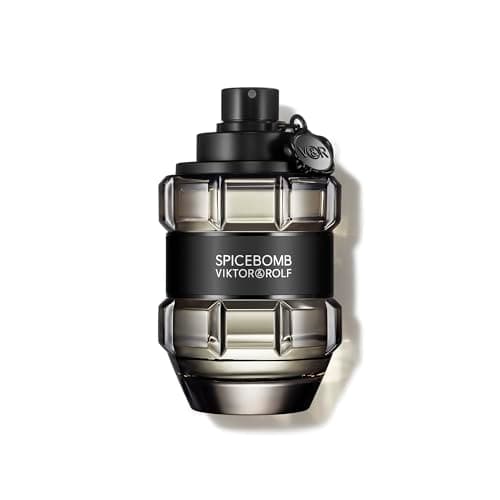
The one that does not smell like the others
The standing complaint about designer men's fragrance is that everything smells related — clean, fresh, ambroxan-driven, broadly interchangeable. Spicebomb is the obvious counterexample. It is a warm spice composition in a grenade-shaped bottle, it makes no attempt to be versatile, and it stands well apart from the fresh-designer pack.
That distinctiveness is the entire reason to own it, and it comes with a corresponding cost in usability. Scent impressions are first-hand; performance figures are compiled from aggregated owner and community reports.
How it opens, how it wears
The opening is bright and slightly deceptive — grapefruit and bergamot with an immediate peppery bite, fresher than the name suggests for the first few minutes.
Then the spice arrives properly, and this is the fragrance. Cinnamon leads, backed by pink pepper and saffron warmth, producing something genuinely hot and dry rather than sweet. Underneath sits tobacco and a soft leather with vetiver, and the whole thing reads cozy and slightly smoldering — the fragrance equivalent of a fire in a cold room.
What distinguishes it from the sweet gourmands it sometimes gets filed with is that Spicebomb is not really sweet. The tobacco and leather keep it dry and grown-up, and there is no vanilla-caramel comfort-blanket underneath. That makes it more wearable for people who find gourmands cloying and less appealing for people who want warmth to mean sweetness.
Longevity and sillage
Good rather than exceptional. Aggregated owner reports describe solid longevity with confident projection, and on the metrics we compile it scores respectably across longevity, sillage and projection without topping any of them. It is an eau de toilette, and it performs like a strong one rather than like an EDP.
Cold weather flatters it considerably. Low temperatures suppress projection generally, which is exactly why a dense spice composition becomes wearable in winter and overwhelming in summer — the mechanic the fall ranking covers in detail. Two to three sprays in cold air; fewer if you are indoors with heating running.
Where it works — and where it really does not
Autumn and winter, evenings, and cold-weather occasions where you want presence and character. In that context it is excellent and genuinely hard to replace; very few things smell like it at any price. It anchors the spicy end of our winter ranking, and it takes the top spot on the spicy cologne ranking, where it is measured against the rest of its family.
It fails comprehensively in heat. Warm weather amplifies the cinnamon and pepper into something suffocating, and there is no dose small enough to fix it. It is also a poor office fragrance — too warm, too distinctive and too present for eight hours of shared air, though it can work in a cold-weather setting at a single spray.
Calling it a winter-only fragrance is not a criticism so much as a specification. Buy it understanding that, and it will not disappoint you.
The honest knocks
The base can read synthetic. This comes up consistently in owner discussion and there is something to it — the leather and tobacco are convincing at first and become a little flat and artificial as the fragrance settles. It is the clearest place where the composition shows its limits.
Versatility is the other cost. This is a one-season, one-mood fragrance, which makes it a poor choice as your only bottle and a questionable choice as your second. It belongs in a collection that already has the basics covered — the logic in the wardrobe guide.
Who should buy it, and who should skip it
Buy it if you want a distinctive cold-weather signature; if you like warm spice without sweetness; if you are tired of clean fresh designers and want something with an actual point of view; or if you need a winter fragrance that is not another vanilla gourmand.
Skip it if you want year-round versatility, if you need office-safe, if you live somewhere hot, or if you want your first or second bottle to cover a lot of ground.
Owning a fragrance that only works three months a year
Spicebomb forces a question worth answering honestly: is a bottle you can only wear in cold weather a sensible purchase?
The case against is obvious. It sits unused for most of the year, it cannot cover for anything else, and the same money spent on something versatile would get worn far more often. If you own one or two fragrances total, a winter-only specialist is the wrong third purchase and a clearly wrong first one.
The case for is that seasonal rotation is the main practical benefit of owning more than one fragrance at all. A scent you wear every day for three months and then put away stays interesting to you in a way a year-round default never does, and cold weather genuinely asks for something the fresh and clean categories cannot provide. Once the basics are covered — the sequence thewardrobe guide sets out — a specialist like this is exactly the right kind of addition.
The smart buy
Spicebomb is a genuine character piece in a category short on them, and for that alone it earns its place — but it is a specialist and should be bought as one. As a third or fourth bottle for cold weather it is excellent. Because the cinnamon-pepper profile is strongly polarizing, testing via a sampler is more worthwhile here than with most designers. If the idea appeals but the price does not, the warm-spice end of the Arabian ranking covers similar ground for far less.